Daphni Monastery: conservation planned for the katholikon wall paintings
The Culture Ministry describes treatment of detachment, damp and earlier overpainting. The work is distinct from the 11th-century mosaics.
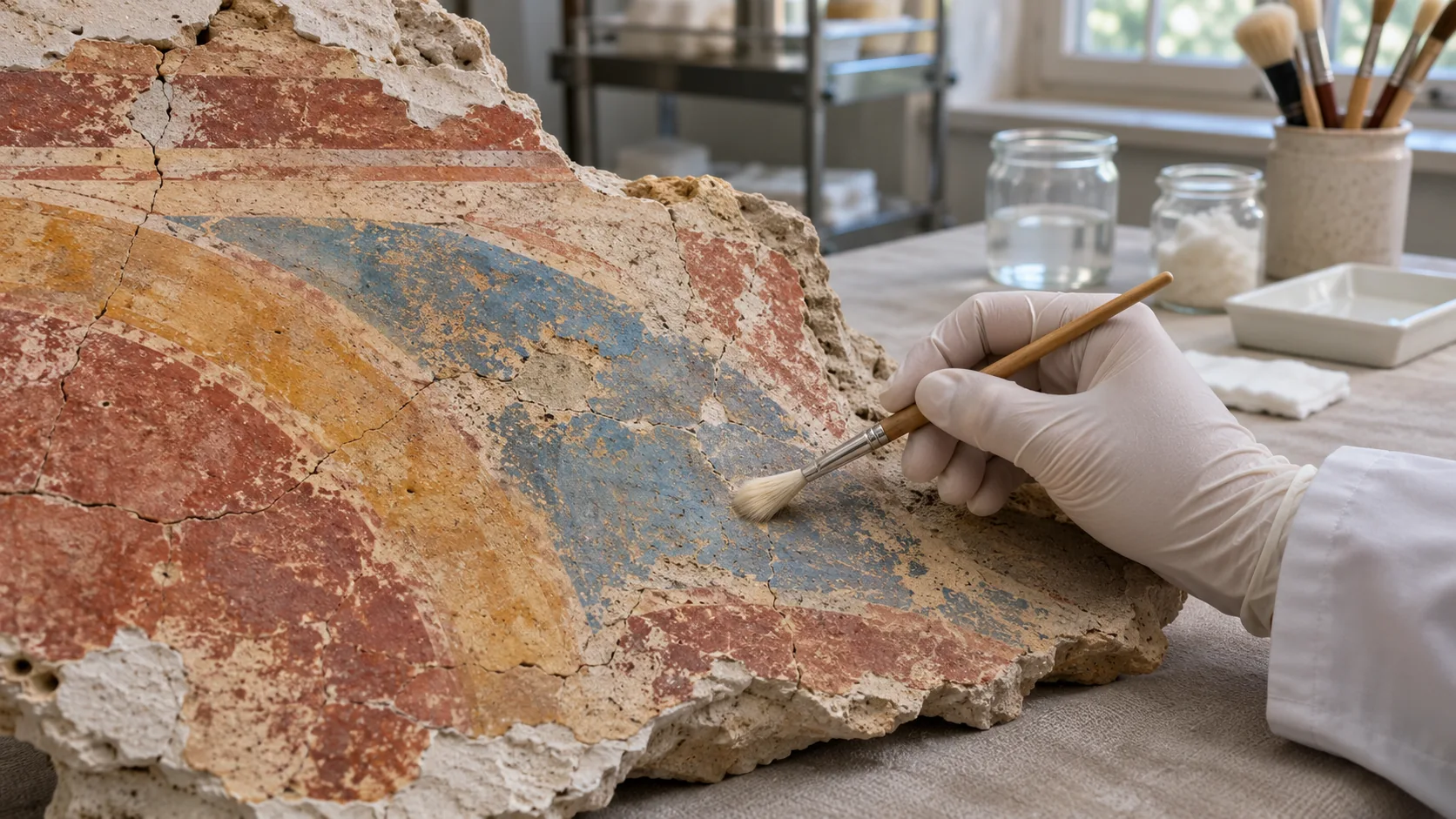
Planned conservation interventions on the wall paintings of Daphni Monastery’s katholikon are described by the Greek Ministry of Culture in its announcement of 3 November 2026. The responsible services are the Directorate for Conservation of Ancient and Modern Monuments and the West Attica Ephorate of Antiquities.
Which painted layer is involved
The katholikon dates to the 11th century, but most surviving wall paintings probably date to the 17th century, according to the ministry. Limited fragments of a later, 20th-century phase also survive. This intervention is not described as a conservation project for the famous 11th-century mosaics.
The study records lost or detached plaster, flaking paint, damp and deposits. It also identifies earlier overpainting, unsuitable colour additions and structurally incompatible materials affecting the survival of original surfaces.
What is planned
The proposed work includes consolidation of weakened plaster and paint layers, removal of later interventions, cleaning of salts, dust, soot and greasy deposits, and aesthetic treatment of limited losses. The study includes historical documentation and specifies interventions for each painted surface.
The announcement establishes the scope of the planning but gives no specific start or completion date, budget or changes to visiting hours. It is therefore not presented as confirmation of completed work or an announcement that the monument will close.
English translation of the Greek edition · Read in Greek