2026 aid applications: bolus deadline of 19 February 2027 for holdings above 900 sheep and goats
Eligible animals over six months old require both bolus placement and registration. An online order alone does not complete the process.
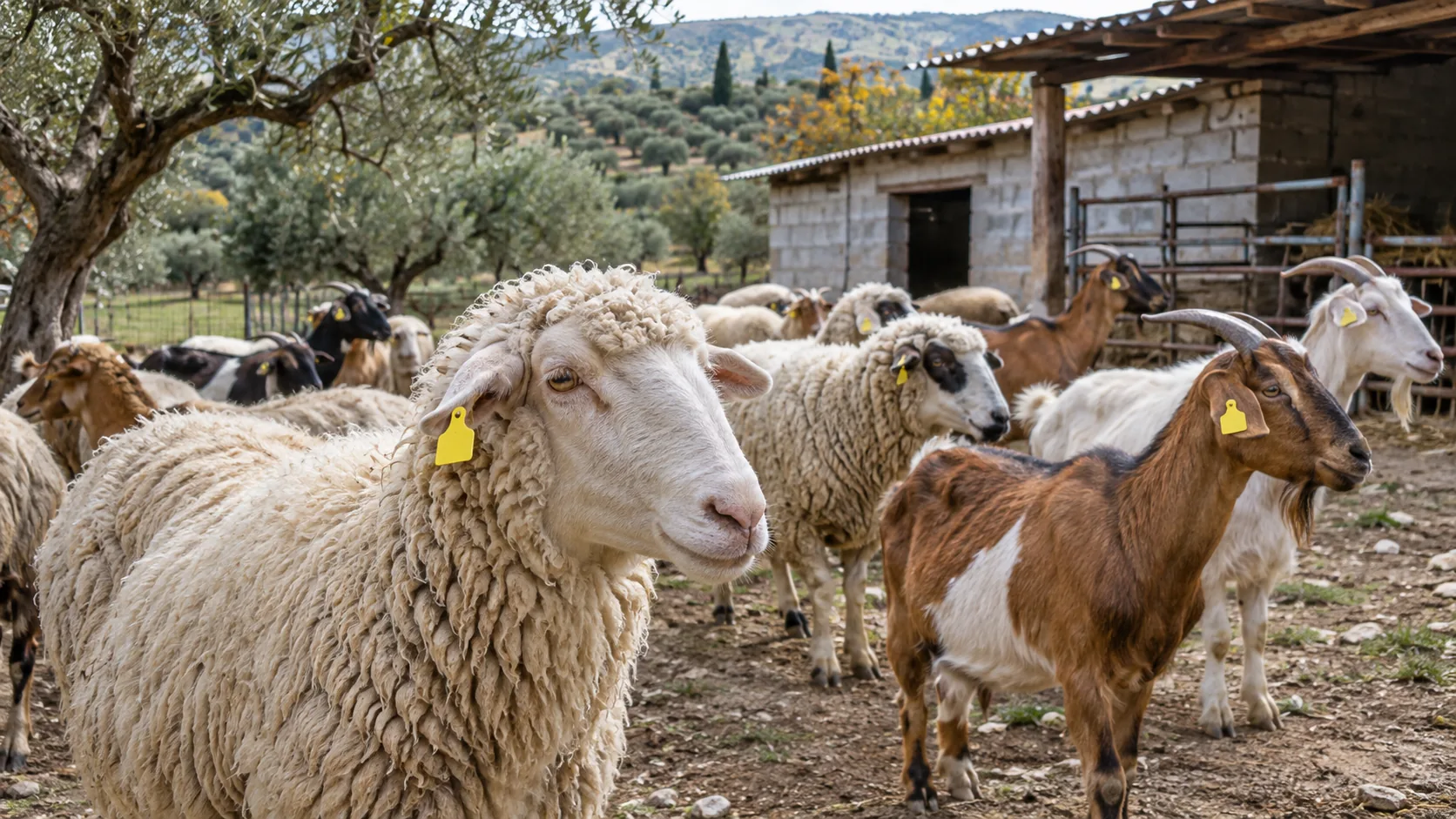
Electronic ruminal boluses must be placed and animal details registered in the Digital Sheep and Goat Traceability Database by 19 February 2027 for holdings declaring more than 900 sheep and goats in the 2026 Single Aid Application (EAE). The Ministry of Rural Development and Food and AADE clarify the deadline in their joint announcement of 3 November 2026.
For 2026 applications, implementation is a pilot applying exclusively to these large holdings. Within them, the obligation covers all eligible animals over six months old, not merely the number exceeding 900.
The three identification requirements
An animal needs a conventional type-1 ear tag, an electronic bolus with a unique identifier matching the ear-tag code, and registration in the digital database. The announcement links these requirements to eligibility for EU or national aid and cites Joint Ministerial Decision 148097/2026, Government Gazette B 3300 of 11 June 2026.
Following digital approval and ordering, placement and registration are performed exclusively by an authorised veterinarian. Registration is completed within two days of placement. Proof of ordering therefore does not replace the two subsequent steps for each animal.
The authorities refer users to Gov.gr services for identification orders and digital traceability. They state that universal implementation across sheep and goat holdings is envisaged from 2027. The 19 February deadline concerns this specific procedure for the 2026 EAE and is not a general deadline for submitting the aid application itself.
English translation of the Greek edition · Read in Greek